Commercial Roof Resolutions: A New Year Maintenance Plan for Texas Property Owners
When you think about New Year’s resolutions for your properties, you probably think about leasing goals, tenant improvements, or cutting operating costs. But here’s a quiet truth: few things impact all three of those areas more than the condition of your commercial roof.
A leaking or failing roof doesn’t just create ugly stains in the ceiling tiles. It disrupts tenants, shuts down revenue, damages inventory, and forces you into expensive emergency decisions. On the flip side, a well-maintained roof quietly protects your income, your asset value, and your peace of mind.
That’s why the start of the year is the perfect time to set some “roof resolutions” for your building. Below is a simple, practical New Year maintenance plan from the team at Birdcreek Roofing to help Texas property owners stay ahead of roof problems in 2026.
Why Your Commercial Roof Needs New Year's Resolutions Too
Your roof is one of the largest capital assets on your property. It’s also one of the easiest to ignore… right up until there’s water on the floor of a tenant’s space.
For Texas properties, the stakes are even higher. Between intense sun, big temperature swings, hail, and wind, commercial roofs here take a beating. Flat roofs with poor drainage can turn into ponds after a storm. Older metal roofs can start to rust, separate at seams, or leak around fasteners. Aging single-ply systems can crack or pull away at the edges.
Building a simple plan at the beginning of the year helps you:
- Catch issues early, when they’re still inexpensive to fix
- Reduce unplanned downtime and angry calls from tenants
- Extend the life of the roof you already have
- Budget for repairs and future replacement instead of reacting in crisis mode
Think of it as moving your roof from “out of sight, out of mind” to “managed like any other critical asset.”
Step 1: Start the Year with a Professional Commercial Roof Inspection
If you only do one thing for your roof this year, make it this. Walking your own roof a couple of times a year is helpful, but a professional commercial inspection goes much deeper. When we inspect a roof for a Texas property owner, we’re looking at:
- The condition of the membrane or panels (TPO, modified bitumen, metal, etc.)
- Seams, laps, and transitions where materials meet
- Flashing around HVAC units, vents, skylights, and other penetrations
- Gutters, scuppers, and internal drains for clogs and damage
- Evidence of ponding water or previous leaks
- Signs of hail or wind damage that might not be obvious from the ground
We also document everything with photos and notes. That documentation is incredibly valuable later – whether you’re planning capital improvements, communicating with investors, or working with an insurance adjuster after a storm.
Make it a resolution: one full commercial roof inspection at the start of each year.
Step 2: Build a Preventative Maintenance Schedule (Not Just “Fix It When It Leaks”)
Many roofs fail early, not because of bad materials, but because they only get attention when something goes wrong. A simple preventative maintenance schedule can change that. It doesn’t have to be complicated or expensive. For most Texas commercial properties, a realistic plan might include:
- A professional inspection once or twice a year
- Quick visual checks after major storms
- Routine cleaning of drains and gutters
- Prompt repairs of minor defects before they spread
What to Include in Your Maintenance Plan
When you sit down with your roofing contractor, ask them to help you map out:
- How often should your specific roof system be inspected
- Which areas need regular cleaning (drains, scuppers, gutters, roof valleys)
- Known “weak spots” on your building – recurring leak areas, problem flashing, high-traffic zones
- A process for reporting roof issues from tenants to management to your roofing partner
This doesn’t just protect your roof. It creates a clear, repeatable system so that staff changes or busy seasons don’t derail your building’s maintenance.
Step 3: Tackle Drainage, Debris, and Standing Water
If your building has a low-slope or flat roof, drainage should be addressed separately. Standing water is a major enemy of commercial roofs. It adds weight to the structure, accelerates wear on the roofing membrane, and often finds its way into seams or tiny punctures. In Texas, where heavy rains can come on suddenly, clogged drains and scuppers are a recipe for trouble.
At least a few times a year, and after major storms, make sure:
- Roof drains are clear and flowing freely
- Gutters and downspouts are not clogged or damaged
- Overhanging trees are trimmed back so that they do not drop excessive leaves or branches on the roof
- Any areas that consistently hold water for more than 48 hours are evaluated and addressed
Sometimes, solving a ponding issue is as simple as correcting a drain or repairing a small section of the membrane. Other times, it may require more extensive work. Either way, catching it in January is better than discovering it in the middle of a busy season with tenants on the phone.
Step 4: Fix Small Problems Before They Become Big Capital Expenses
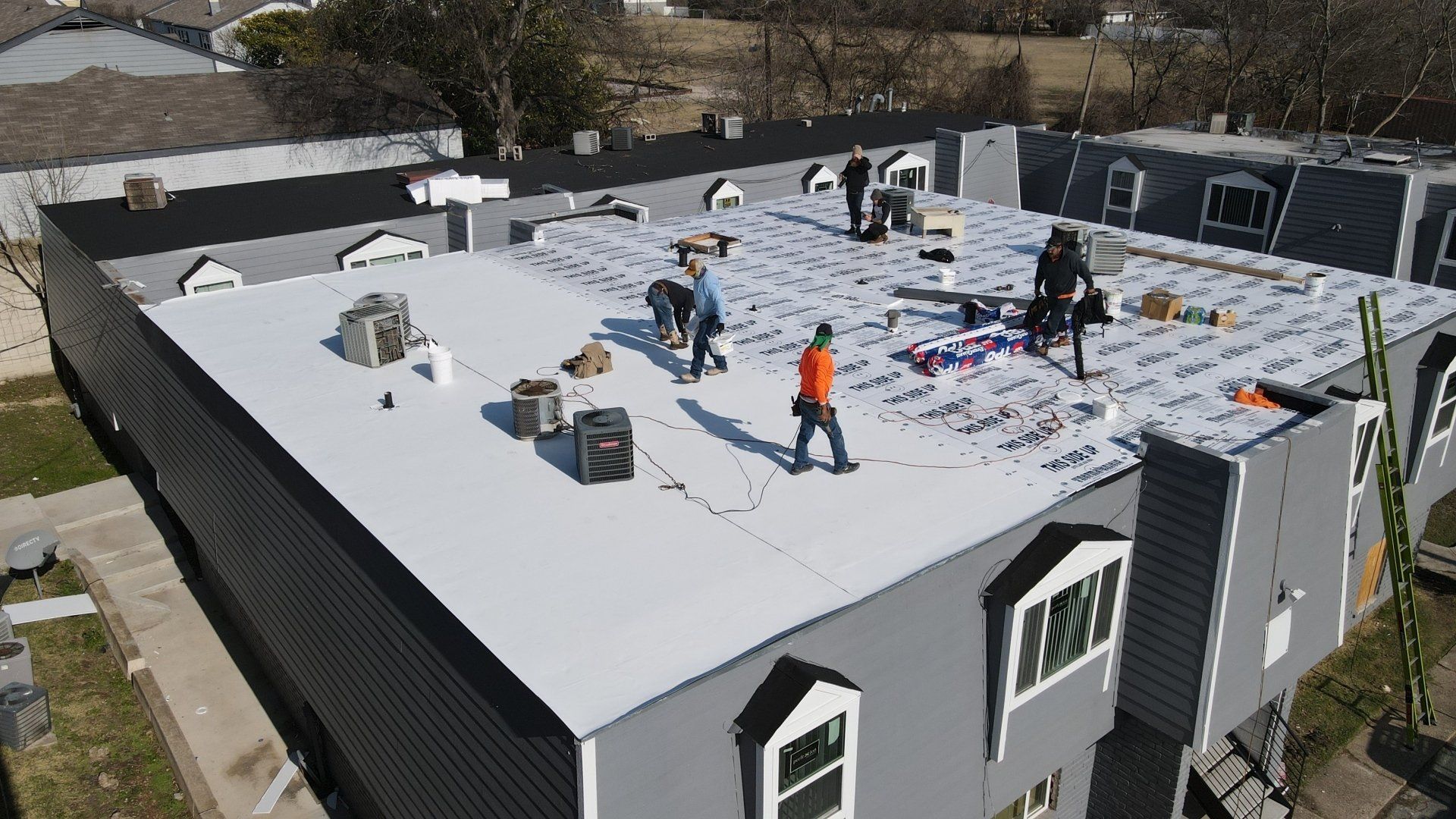
Every commercial roof has minor flaws: a small puncture from a dropped tool, a bit of loose flashing, a seam that’s starting to open up. On their own, those issues may not look like much. Left alone, they’re exactly the spots where leaks usually start. Part of your New Year's roof plan should be a commitment to handle small repairs quickly. That might include:
- Patching small punctures or blisters
- Re-sealing seams and transitions that are starting to separate
- Replacing failed sealant around penetrations and flashing
- Tightening or replacing loose fasteners on metal roofs
- Repairing minor damage from hail before it worsens
From a budget standpoint, this approach turns unpredictable emergencies into manageable line items. A few small repairs over the course of a year are almost always cheaper than one major leak that shuts down a tenant space and requires interior build-back.
Step 5: Review Warranties, Documentation, and Budget for the Year
The beginning of the year is a great time to pull out your roof paperwork and give it a quick review. Questions to ask:
- Is your roof still under a manufacturer’s warranty?
- Does that warranty require documented inspections or maintenance to remain valid?
- Do you have up-to-date photos and inspection notes on file?
- When was the last time you updated your reserve study or capital plan to reflect the roof’s true condition?
This is also the moment to discuss your budget with your roofing contractor. Based on what they see, you can plan:
- An approximate timeline for major repairs or replacement
- A realistic annual maintenance budget
- A “wish list” of improvements (such as adding walk pads, upgrading insulation, or improving drainage)
Going into the year with eyes open – instead of hoping your roof will “just make it one more season” – puts you in control financially.
Step 6: Get Ahead of Texas Weather in 2026
You can’t control the weather, but you can control how ready your building is for it. For Texas property owners, that means preparing for:
- Spring hail and wind storms
- Intense summer heat and UV exposure
- Heavy rain events that can overwhelm poor drainage
- Occasional cold snaps and freeze-thaw cycles
As part of your New Year's roof plan, consider:
- Scheduling a pre-storm-season inspection (early spring)
- Establishing a clear protocol for post-storm inspections
- Deciding in advance who you will call if tenants report leaks or damage
- Keeping your roof documentation organized in case you need to file an insurance claim
When the first big storm of the year hits, you don’t want to be scrambling for a roofer’s phone number or trying to remember which unit had issues last year. A little planning now saves a lot of stress later.
How Birdcreek Roofing Helps Texas Property Owners Stick to Their Resolutions
Many owners and managers know their commercial roof needs more attention, but they’re already juggling a dozen other priorities. That’s where partnering with the right roofing company makes all the difference. At Birdcreek Roofing, we help Texas property owners:
- Perform detailed commercial roof inspections with clear, photo-driven reports
- Create customized maintenance plans for single buildings or multi-property portfolios
- Handle leak repairs and small issues quickly, before they grow
- Plan and budget for eventual roof replacement so it doesn’t catch anyone off guard
Our goal is simple: protect your buildings, your tenants, and your bottom line by treating your roof like the critical asset it is.
Ready to Make 2026 the Year Your Commercial Roof Gets the Attention It Deserves?
If you’re ready to set some real “roof resolutions” this year, the next step is straightforward: get a clear picture of what you’re working with. Schedule a commercial roof inspection, walk the roof with a trusted contractor, and turn what you learn into a simple maintenance plan for 2026. Whether your roof needs a few small repairs, a structured maintenance program, or a roadmap toward future replacement, you’ll make informed decisions instead of waiting for the next leak.
When you’re ready to put a New Year maintenance plan in place for your Texas property, Birdcreek Roofing is here to help you protect the investment that’s literally over your head.
Talk With a Roofing Consultant
Fill out the form below and one of our roofing consultants will be in touch with you within 24 hours.
Blog Page
Main Office
2608 N. Main St, Ste B-313
Belton, TX 76513