Common Roofing Challenges for Churches and Large Worship Buildings
Churches and large worship buildings often carry a unique kind of responsibility. These properties are more than just buildings. They are places where people gather every week for worship, community events, childcare, counseling, meals, and special occasions. Because of that, roofing issues on these properties can quickly become more than just a maintenance concern. They can affect schedules, budgets, safety, and day-to-day ministry operations.
At Birdcreek Roofing, we understand that roofing needs for churches and large worship buildings are often more complex than what you see on a typical home. These buildings may have older roofing systems, multiple roof sections, taller features, larger square footage, or design elements that require careful planning. Add in the unpredictable nature of Texas weather, and it becomes even more important to stay ahead of roofing problems before they turn into larger disruptions.
Here are some of the most common roofing challenges churches and large worship buildings face, and why proactive attention matters:
Large Roof Areas Mean More Exposure
One of the biggest challenges with churches and worship facilities is simply the amount of roof area involved. A larger roof means more surface exposed to sun, wind, rain, hail, and debris throughout the year.
In Texas, that matters. Strong UV exposure, spring storms, high winds, and sudden weather shifts can all wear down roofing materials over time. On a large building, even a minor issue in one section of the roof can be easy to miss until it starts affecting the interior.
When a property has multiple connected rooflines over sanctuaries, offices, classrooms, fellowship halls, and covered entryways, it becomes even more important to monitor the roof as a complete system rather than assuming one visible area tells the whole story.
Roof Designs Are Often More Complex
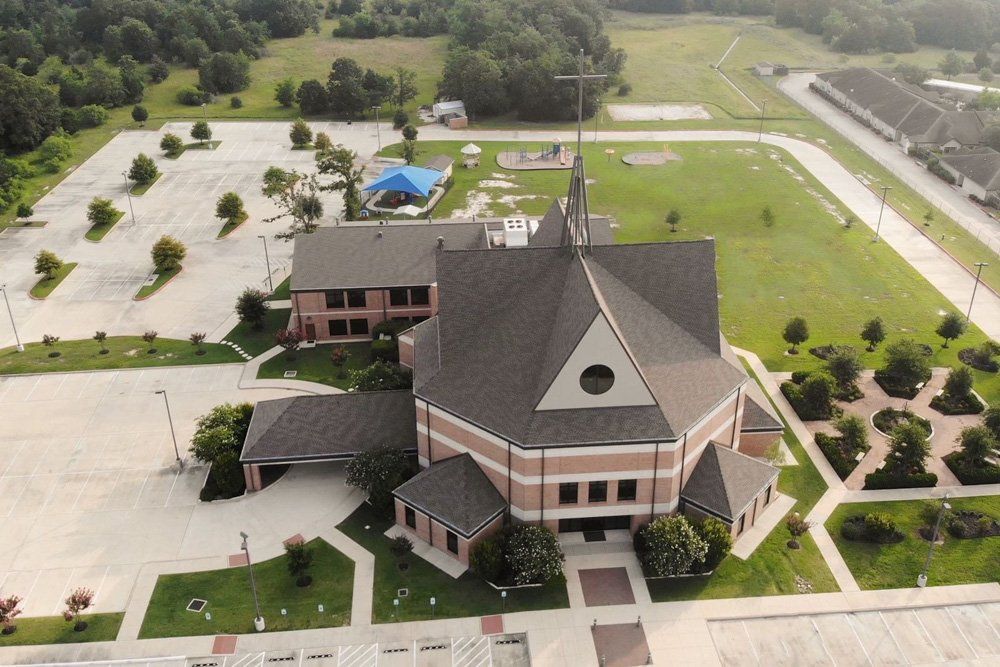
Many churches are not simple box-shaped buildings with one straightforward roofing system. They often have a combination of steep slopes, valleys, transitions, dormers, steeples, parapet walls, mechanical penetrations, and multiple additions completed over time.
That complexity creates more areas where water has to be directed properly and more points that need to remain sealed and protected. Flashing details, transition areas, and intersections between roofing sections can become vulnerable as materials age or after major weather events.
A complex design also means that repairs and inspections need to be approached carefully. What looks like a simple leak inside the building may actually be coming from a different roof section than expected. Tracking down the source takes experience and attention to detail.
Aging Roofing Materials Can Create Ongoing Issues
Many churches and large worship buildings have been around for decades. In some cases, the roof has lasted a long time with only limited maintenance. In others, repairs may have been made over the years as problems came up, but the overall roofing system is still getting older.
As roofing materials age, shingles can become brittle, flashing can wear down, sealants can weaken, and protective surfaces can begin to lose effectiveness. Even if the roof is not currently leaking, an older roof may be much more vulnerable during a Texas storm than it was just a few years earlier.
This is especially true for buildings that have gone through repeated cycles of intense summer heat, hail, wind, and heavy rain. Church leadership teams often do their best to make wise decisions with maintenance budgets, but waiting too long can sometimes limit the available options when problems finally show up.
Leaks Can Affect More Than Just One Room
When a leak happens in a church or worship facility, the impact can reach farther than many people expect. A roof leak may affect a sanctuary, children’s area, office, classroom, fellowship hall, sound booth, or storage room. It may also damage ceilings, insulation, drywall, flooring, furniture, or equipment.
In some cases, the issue is not just the water itself, but the disruption it causes. A building used throughout the week for services, meetings, and events may have to shift rooms, delay activities, or work around cleanup and repair needs.
Because these buildings serve so many purposes, even a small leak can become a major inconvenience. That is one reason regular inspections and timely roof repairs are so valuable. Catching issues early helps reduce the chances of more widespread interruption later.
Drainage Problems Can Lead to Bigger Headaches
Proper drainage is critical for any building, but especially large buildings. When water is not moving off the roof the way it should, problems can develop faster than expected.
Churches and large worship buildings may have roof areas where debris collects, drains clog, gutters fill up, or water lingers longer than it should after a storm. Over time, that extra moisture can increase wear on roofing materials and create more opportunities for leaks.
This is especially important during spring and early summer in Texas, when heavy rainstorms can dump large amounts of water in a short time. A drainage issue may not seem urgent during dry weather, but it can quickly become obvious during the next storm.
Keeping gutters, downspouts, and drainage paths clear is one of the simplest ways to protect a larger roof system.
Storm Damage Is Easy to Overlook on Large Buildings
After a storm, visible damage is not always easy to spot from the ground. On a church or large worship building, that challenge is even greater. A property may have roof areas that are difficult to see without the right vantage point. There may be damage on one side of the building while the rest looks untouched. Hail impact, lifted shingles, damaged flashing, or punctures from debris may not be obvious to staff or volunteers walking the property after the weather clears.
This can create a false sense of security. Everything may seem fine until a leak appears later or more noticeable damage develops over time.
For larger buildings, storm damage inspections are especially important because the roof system may have vulnerable areas that are not visible without a closer look.
Maintenance Often Gets Delayed
Churches are often balancing many priorities at once. Ministry needs, staffing, outreach, facility upkeep, and budgeting decisions all compete for attention. Because of that, roofing concerns sometimes get pushed down the list until there is a clear sign that something is wrong.
That is understandable, but roofing issues tend to become more expensive when they are addressed only after damage spreads. Small repairs can often be handled more efficiently when discovered early. Waiting until interior damage appears or a larger section of the roof is affected can reduce flexibility and increase urgency.
A routine roof inspection schedule can help church leaders make more informed decisions instead of reacting under pressure.
Budget Planning Can Be More Complicated
Large worship buildings typically require a higher level of planning when roofing work is needed. Even when the issue is limited to repairs, leadership teams may need time to review options, understand priorities, and make budget decisions carefully.
That process can be harder when the condition of the roof is unclear. If no one knows whether the building needs minor repairs, more extensive work, or immediate attention after a storm, it is difficult to plan wisely.
This is where clear communication matters. Church leaders usually want straightforward information, honest recommendations, and a practical understanding of what needs to happen now versus what can be monitored for later.
Access and Scheduling Require Extra Care
Another common challenge with churches is timing. Roofing work often has to be coordinated around worship services, weekday programs, weddings, funerals, childcare, office hours, and community events.
That does not mean roofing work cannot be done effectively. It simply means communication and planning matter. The right roofing partner understands that these properties are active, not empty, and that disruption should be kept to a minimum whenever possible.
For churches, it is helpful to work with a roofing company that respects the building’s purpose and helps leadership think through scheduling in a practical way.
Regular Inspections Help Churches Stay Ahead
One of the best ways to reduce roofing surprises on a church or large worship building is through regular inspections. A professional inspection can help identify storm damage, worn materials, drainage concerns, flashing problems, and other roofing issues before they lead to more disruption.
This does not mean every church needs major work right away. In many cases, the most valuable part of an inspection is clarity. It helps leadership understand the roof’s current condition and make smart next steps based on facts, not guesswork. For buildings with larger footprints and more complex roof systems, that kind of clarity is especially important.
Trusted Roofing Support for Texas Churches
Churches and large worship buildings face many of the same roofing issues as other properties, but the scale, complexity, and day-to-day use of these buildings can make those challenges more difficult to manage. From storm damage and drainage concerns to aging materials and delayed maintenance, it is important to stay proactive and address roofing issues before they begin affecting the people and ministries inside the building.
At Birdcreek Roofing, we know that replacing or repairing a roof can feel stressful and confusing. That is why we focus on prompt, reliable service and clear guidance that helps property owners make sense of the process. If your church or worship facility in Texas needs a roof inspection or you have concerns about the condition of your roof, contact us to schedule an evaluation and get honest answers about the next steps.
Talk With a Roofing Consultant
Fill out the form below and one of our roofing consultants will be in touch with you within 24 hours.
Blog Page
Main Office
2608 N. Main St, Ste B-313
Belton, TX 76513