How to Spot Roof Damage After a Texas Storm — What Every Homeowner Should Check
When a powerful Texas storm rolls through, your roof is your home’s first line of defense. High winds, pounding hail, and driving rain can leave behind hidden damage that—if left unchecked—can lead to leaks, costly repairs, or even a full roof replacement down the line. At Birdcreek Roofing, we’ve helped thousands of Texas homeowners recover after severe weather, and we know how critical those first few days after a storm can be.
Whether you’ve just experienced a late-spring hailstorm in Georgetown or a fall wind event sweeping across Central Texas, it’s important to know what to look for. Here’s a comprehensive guide to help you identify storm damage early—and understand when to call in a trusted roofing professional for help.
Why Texas Storms Are Especially Tough on Roofs
Texas weather is unlike anywhere else. One day it’s calm and sunny, and the next, a fast-moving thunderstorm brings golf-ball-sized hail, 60-mph wind gusts, and torrential downpours. This mix of sudden, intense weather patterns puts tremendous stress on roofing systems. Even durable roofs can sustain significant damage during a single storm.
Hailstones can bruise or crack shingles, wind can lift or completely tear them off, and heavy rainfall can expose weak points or worn flashing. The problem is that much of this damage isn’t always obvious from the ground. Many homeowners don’t realize there’s an issue until weeks or months later when leaks or water stains appear inside.
By learning to spot storm damage early, you can act quickly, prevent further problems, and ensure your insurance claim is handled properly.
Six Clear Signs Your Roof May Have Storm Damage
After the weather clears and it’s safe to go outside, take a slow walk around your property. You don’t need to climb on the roof—many signs of damage are visible from the ground or inside your home. Here are six red flags to watch for:
1. Missing or Lifted Shingles
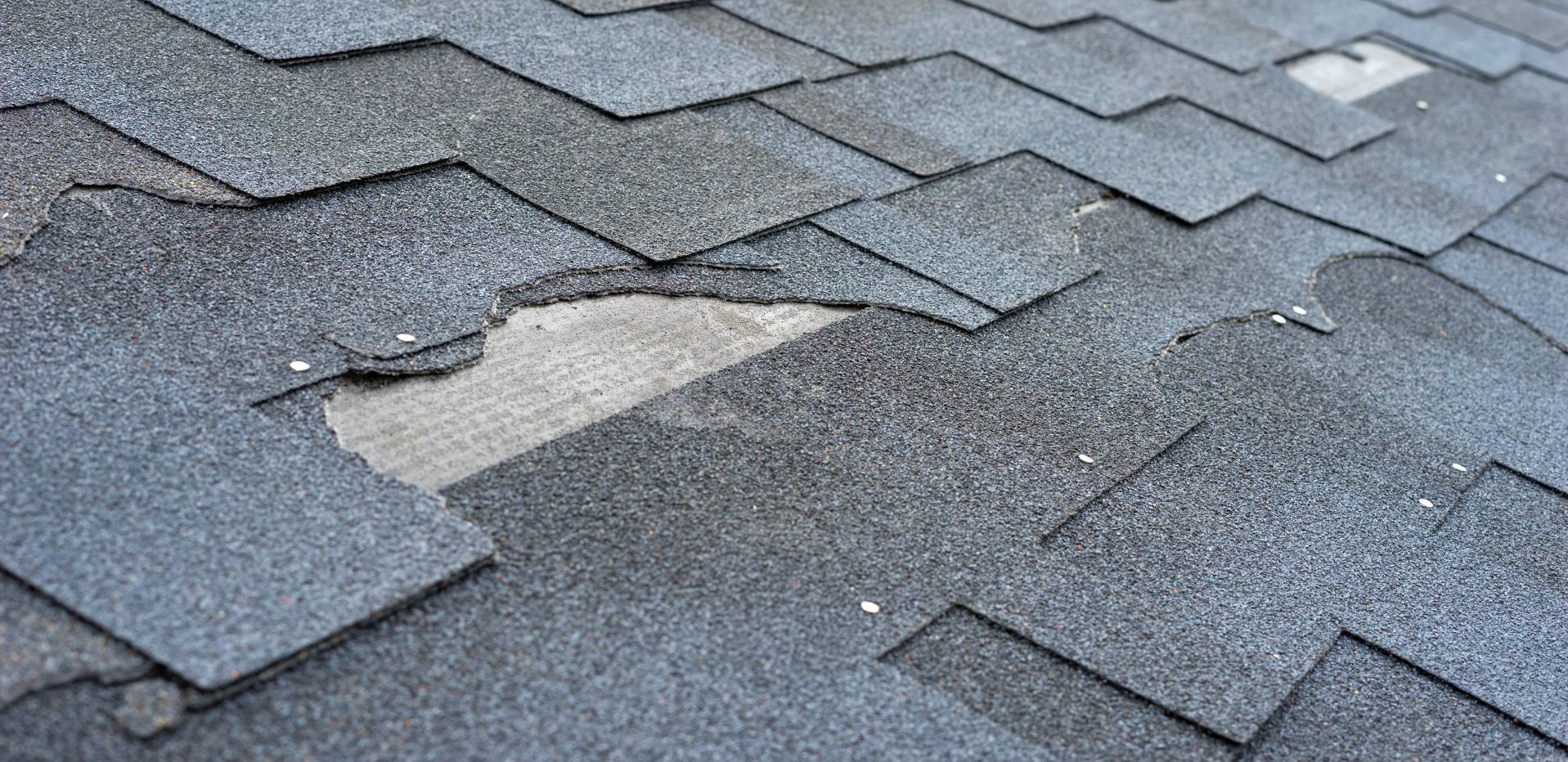
High winds can tear shingles loose or lift them up enough to break the seal. Missing shingles are usually easy to spot from the ground—they’ll appear as gaps or darker patches on your roof. Lifted shingles may be harder to see but can still allow water to seep underneath, leading to leaks over time.
2. Dented Gutters, Flashing, or Vents
Hail doesn’t just damage shingles. Check metal components like gutters, downspouts, roof vents, and flashing for visible dents, cracks, or paint chips. If these areas show signs of impact, your shingles likely do too.
3. Granule Loss in Gutters
Asphalt shingles have protective granules that shield them from UV rays and water damage. Hail impact or heavy rain can knock these granules loose. Look for granule buildup in your gutters or at the base of downspouts—it often looks like coarse, black sand. Excessive loss can shorten your roof’s lifespan.
4. Interior Water Stains or Damp Spots
Sometimes storm damage reveals itself indoors first. Check ceilings and walls for new water stains, bubbling paint, or damp spots. These are signs that water has already made its way through the roofing system.
5. Cracked, Bruised, or Punctured Shingles
While this typically requires a closer inspection, you may spot bruised or cracked shingles with binoculars. Hail impacts often leave circular marks, cracks, or bruises that feel soft to the touch—almost like a bruise on an apple. Left unaddressed, these can develop into leaks over time.
When to Call a Roofing Professional
Some storm damage is obvious; other issues are subtle and can only be identified during a thorough inspection. If you notice any of the signs above—or even if you’re unsure—it’s wise to call a trusted roofing professional right away. Here’s why:
- Safety first: Climbing onto a wet or damaged roof is dangerous. Leave it to experienced crews with proper equipment.
- Hidden damage: Professionals know where to look for less obvious problems that can lead to major issues down the line.
- Insurance timelines: Most insurance policies have strict deadlines for filing storm damage claims. A prompt inspection ensures you don’t miss that window.
- Prevent further damage: Temporary repairs or tarping can prevent active leaks while your insurance claim is processed.
At
Birdcreek Roofing, our team is trained to spot storm damage quickly and accurately. We document everything with photos and notes, so you have a clear picture of your roof’s condition before moving forward with repairs or filing a claim.
What to Expect During a Professional Roof Inspection
If you’ve never had your roof inspected after a storm, here’s what you can expect from our process:
- Exterior Evaluation: We examine shingles, flashing, vents, gutters, and other components for wind, hail, or rain damage.
- Attic & Interior Check: We inspect for water intrusion, soft decking, or ventilation issues that may have been caused by the storm.
- Detailed Documentation: We take clear photos and provide a written summary outlining the extent and type of damage.
- Recommendations: We’ll explain whether your roof needs minor repairs, more extensive restoration, or a full replacement.
- Insurance Guidance: If a claim is necessary, we’ll walk you through the process, meet with your adjuster if needed, and ensure nothing is overlooked.
This thorough approach helps Texas homeowners make informed decisions without guesswork or unnecessary stress.
Next Steps After Storm Damage Is Confirmed
Once damage has been identified, the next steps typically involve:
Temporary Protection
If there’s active leaking or exposed decking, we’ll apply emergency tarping or temporary patches to prevent further interior damage.
Filing Your Insurance Claim
Our team can help you navigate the claims process by providing inspection documentation, repair estimates, and adjuster coordination. Filing promptly ensures your claim stays on track.
Scheduling Repairs or Replacement
Depending on the severity of the damage, repairs may be completed in a single day, or a full roof replacement may be scheduled. At Birdcreek Roofing, we work efficiently to minimize disruption and protect your home as quickly as possible.
Why Texas Homeowners Trust Birdcreek Roofing
We’re not just another roofing company. Birdcreek Roofing is proud to be a Texas-based, community-focused roofing team that’s helped more than 20,000 homeowners across the state. Our reputation is built on three core values:
- Generosity: We give back through partnerships like Habitat for Humanity, helping provide safe shelter to families in need.
- Optimism: We treat every storm as an opportunity to make homes stronger, not just to repair damage.
- Drive: We work quickly and thoroughly because your peace of mind matters.
When storms hit, you deserve a roofing partner you can trust—not one who disappears after the work is done. From inspection to final cleanup, we’re with you every step of the way.
Be Proactive: Seasonal Maintenance Tips
Texas weather isn’t going to change—but your response can. Here are a few proactive maintenance tips to keep your roof ready for whatever comes next:
- Schedule annual inspections before storm season hits, ideally in late winter or early spring.
- Keep gutters clean to prevent water backup and ensure proper drainage during heavy rains.
- Trim overhanging branches to reduce impact damage during windstorms.
- Check attic ventilation and insulation to prevent moisture buildup that can worsen after storms.
- Act quickly after severe weather—don’t wait until you see a leak to get your roof checked.
Protect Your Home with Birdcreek Roofing
Storm damage can be overwhelming—but you don’t have to navigate it alone. Whether you’ve spotted a few missing shingles or you just want peace of mind after a major storm, our team is here to help. Contact us today for a free, no-obligation roof inspection. We’ll assess any damage, clearly explain your options, and help you take the right next step to keep your home safe and sound.
Talk With a Roofing Consultant
Fill out the form below and one of our roofing consultants will be in touch with you within 24 hours.
Blog Page
Main Office
2608 N. Main St, Ste B-313
Belton, TX 76513