Can Your Roof Handle a Texas Freeze? What Homeowners Should Check Before Temperatures Drop
In most parts of the country, winter brings months of snow, ice, and predictable cold. Texas isn’t one of those places. Here, winter shows up in quick swings — warm one day, freezing the next. Those sudden temperature drops are exactly what make Texas roofs vulnerable. Even a single hard freeze can expose weak points, crack aging shingles, or create leaks you won’t notice until the damage has already spread.
At
Birdcreek Roofing, we see this every year. Homeowners assume their roof is fine because “it doesn’t get that cold in Texas.” But the truth is that our weather is tougher on roofing systems than many people realize. Before the next cold front blows in, there are a few key things you should check to make sure your roof can actually handle a Texas freeze.
This guide breaks it all down — what to look for, why sudden freezes are hard on roofs, and the small issues that can turn into big problems overnight.
Why Texas Freezes Are Harder on Roofs Than You Think
A long, steady winter can cause its own problems, but Texas roofs face something different: rapid expansion and contraction. When temperatures swing from 75° to 28° in a matter of hours, your roofing materials expand and shrink fast. That movement puts stress on:
- Shingles
- Flashing
- Sealant
- Pipe boots
- Ridge caps
- Nail fasteners
- Gutters
In other words, every part of your roofing system is forced to shift quickly. If your roof is already aging, storm-worn, or improperly installed, those sudden temperature drops can expose weaknesses almost immediately. This is why homeowners often call us after the first freeze, not the third or fourth. If there’s a problem brewing, freezing temps are usually what bring it to the surface.
1. Check Your Shingles for Cracking, Lifting, or Brittleness
Shingles naturally get more brittle as temperatures drop. In extreme cold, they can crack or split if they’re already reaching the end of their lifespan. This is especially common on roofs that are:
- 10 to 20+ years old
- Exposed to strong summer UV rays
- Impacted by hail in previous seasons
- Missing granules
Granule loss is one of the biggest signs of shingle fatigue. As shingles age, they lose the protective coating that helps them resist heat and cold. If your shingles feel thin, smooth, or bare in certain spots, it’s a sign they may not withstand a freeze.
Lifted shingles are another issue to look for. When wind, heat expansion, or previous storms break the seal, shingles can lift just enough to let cold air and moisture underneath. Freezing temperatures can then worsen the separation and create pathways for water intrusion. Once the sun comes back out and dries up any moisture, leaks often appear inside the home.
A trained eye can spot these issues quickly. If you’re unsure, schedule a professional inspection before winter fully settles in.
2. Inspect Your Flashing — It’s One of the First Things to Fail During a Freeze
Flashing is the thin metal installed around chimneys, skylights, vent pipes, and roof-to-wall transitions. Its job is to keep water out of vulnerable areas. The problem is that flashing expands and contracts at a different rate than shingles or wood decking. This mismatch often leads to small separations or cracks in the sealant.
Texas freezes can take a small gap in flashing and turn it into a full-on water entry point. Pay close attention to:
- Chimney flashing
- Step flashing along walls
- Skylight edges
- Roof penetrations
- Valley flashing
Even minor gaps can allow cold air to shock the materials beneath, causing moisture buildup or leaks that appear days later.
3. Look for Exposed Nail Heads and Loose Fasteners
Texas summers cause shingles to expand, which sometimes exposes nails. When winter arrives, the sudden contraction can loosen or “back out” those nails from the decking. This creates tiny entry points for water, and they become big deals when freezing temperatures cause moisture to expand beneath your shingles.
If you see shiny nail heads on your roof, it’s a sign that something is shifting. These spots should be sealed or repaired before temperatures drop further.
4. Inspect Pipe Boots and Seals Around Vents
Most roofs have rubber or synthetic boots around plumbing vents. These boots get brittle with age and extreme weather. Freezing temperatures cause the material to shrink and crack, allowing water to seep in when the frost melts.
Signs your pipe boots may fail during a freeze:
- Cracking around the base
- Exposed edges
- Loosened metal collars
- Separation from sealant
- Visible sun damage or dry rot
These are quick, inexpensive fixes — but ignoring them is one of the most common causes of winter roof leaks in Texas.
5. Make Sure Your Gutters Are Clear Before the First Freeze
Even though Texas doesn’t get much ice, it only takes one clogged gutter to cause water to pool, freeze, and back up under your shingles. When standing water freezes, it expands, pushing against your roofing materials and sometimes lifting them.
You don’t need heavy snowfall for this to happen — just cold rain, tree debris, and an overnight freeze.
Clean gutters help your roof shed water properly, which is especially important when temperatures fluctuate. Proper drainage reduces stress on the fascia, soffit, and edges of your roofing system.
6. Assess Your Attic Ventilation and Insulation
Most homeowners don’t realize that attic conditions play a huge role in winter roof performance. Poor ventilation traps warm air inside your attic. When a freeze hits, that warm, moist air meets a cold roof deck — and condensation forms.
Over time, that trapped moisture can cause:
- Mold growth
- Wood rot
- Rusted nails
- Warped decking
- Premature shingle damage
A quick attic check can reveal a lot. Look for damp insulation, staining, frost on nails, or musty odors. These are all signs your ventilation may need attention before extreme cold arrives.
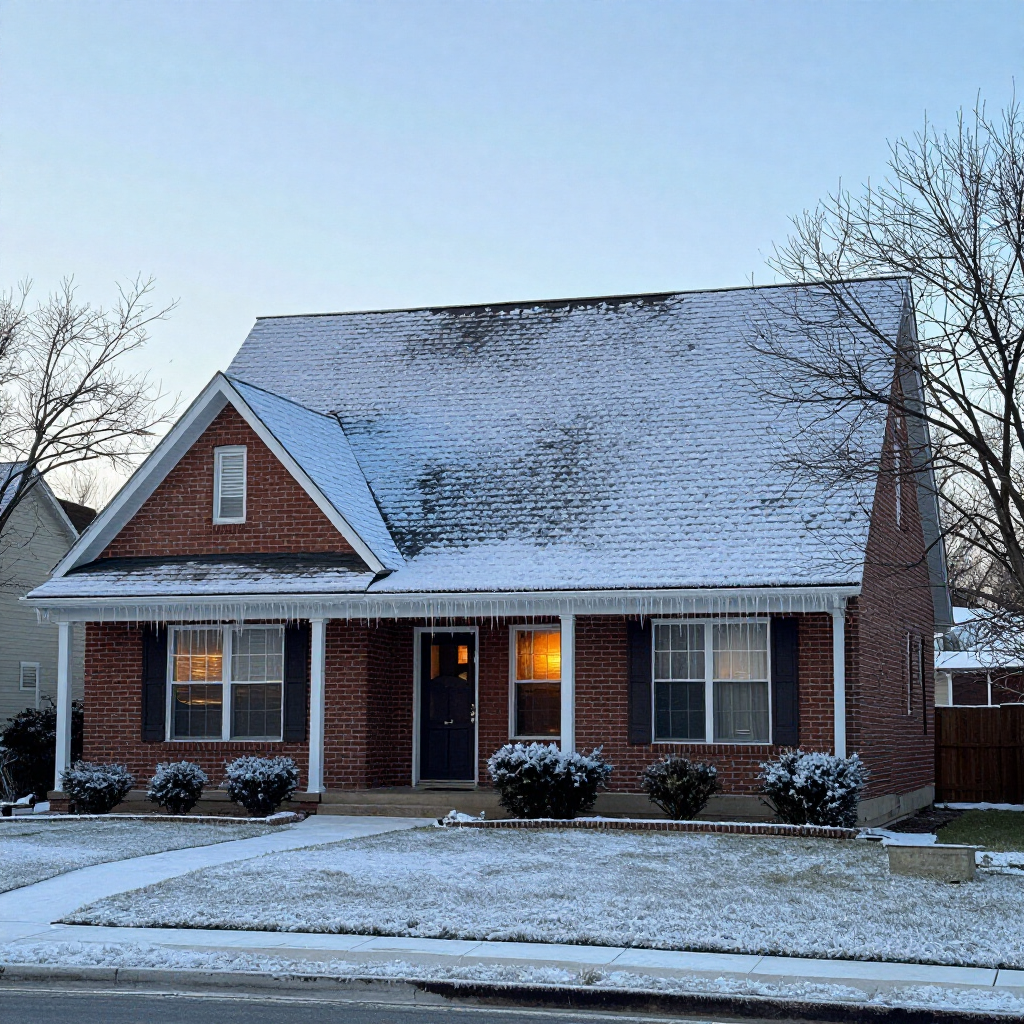
7. Walk the Interior for Hidden Signs of Roof Trouble
Before winter settles in, walk through your home and look for interior indicators of potential roof damage. Ceiling stains, discoloration near vents, or unexplained moisture around walls can signal slow leaks that will worsen in freezing conditions.
Pay special attention to:
- Upstairs bedrooms
- Bathrooms with roof vents
- Areas around skylights
- Spaces near fireplaces or chimneys
Even if a stain looks old, cold temperatures can reopen the leak path once materials contract.
8. Trim Overhanging Tree Limbs Before a Freeze
Texas trees don’t shed the same way they do up north. Heavy oak and cedar limbs often hang low over homes. A freeze can make them brittle, and strong winter winds can snap weakened branches.
One falling limb is all it takes to crack shingles, damage gutters, or puncture the decking. If limbs are close to touching your roof—or if you hear them scraping during storms—it’s time to trim them back.
9. Schedule a Pre-Winter Roof Inspection
The best way to ensure your roof can withstand a Texas freeze is to have a professional inspect it before temperatures drop. At Birdcreek Roofing, we focus on the early warning signs most homeowners miss — the small vulnerabilities that turn into big leaks when the first freeze hits.
A winter-readiness inspection typically includes:
- Checking all shingles for damage or lifting
- Evaluating flashing and sealant conditions
- Inspecting pipe boots, vents, and penetrations
- Examining ridge caps and high-wind areas
- Assessing attic airflow and insulation
- Ensuring proper drainage around gutters and valleys
This gives you a clear picture of your roof’s condition before the worst weather arrives.
Your Roof Doesn’t Need Months of Snow to Fail — Just One Texas Freeze
Winter in Texas is unpredictable, but your roof’s performance doesn’t have to be. A single hard freeze can reveal issues that summer heat and fall storms kept hidden. The good news? Most problems are preventable with a little preparation.
If you want to make sure your roof is ready for winter, Birdcreek Roofing is here to help. We’ll give you an honest assessment, walk you through the condition of your roof, and recommend only what you truly need. No pressure — just the truth. Because when the temperatures drop, your roof should be the last thing you worry about.
Contact us today to learn more!
Talk With a Roofing Consultant
Fill out the form below and one of our roofing consultants will be in touch with you within 24 hours.
Blog Page
Main Office
2608 N. Main St, Ste B-313
Belton, TX 76513