What Happens to a Metal Roof During Freeze/Thaw Cycles?
Texas winter is weird. It’s not like Minnesota, where you’re buried under snow for three months straight. Around here, winter is more like: 75 degrees on Tuesday, 28 degrees on Thursday, and somehow you’re scraping ice off your windshield on Friday morning. Those sudden temperature swings don’t just mess with your wardrobe — they can mess with your roof too.
At Birdcreek Roofing, we get questions every winter about what freeze/thaw cycles do to different roofing materials. And if you’ve been thinking about upgrading to metal roofing, you might be wondering whether metal handles those swings better… or worse.
The good news is this: metal roofing is one of the best roofing systems you can have during freeze/thaw weather. But like anything else, the details matter — and winter tends to expose weak spots fast.
Let’s walk through what actually happens to a metal roof during freeze/thaw cycles, what’s normal, what isn’t, and what homeowners in Central Texas should watch for.
What Freeze/Thaw Cycles Actually Mean for Your Roof
A freeze/thaw cycle is when temperatures drop low enough for water to freeze, then warm back up enough for it to melt again. That doesn’t sound like a big deal at first — until you realize how destructive water can be when it repeats that process over and over.
Here’s why: when water freezes, it expands. If that water has worked its way into a small gap or crack, freezing puts pressure on whatever it’s trapped inside. Then, when it warms back up and melts, it can move deeper into the material. When it freezes again, the cycle repeats — and that pressure gets worse over time.
This is one of the main reasons older roofs start “randomly” leaking during winter. It’s not random at all. Winter weather is just better at revealing the weak points.
Does a Metal Roof Expand and Contract in Cold Weather?
Yes — and this is completely normal.
Metal expands when it heats up and contracts when it cools down. That’s true whether it’s 105 degrees in July or 25 degrees in January. The difference is that in winter, the swings can happen quickly, especially on sunny days when the roof surface warms up fast.
But here’s the important part: metal roofing systems are designed to account for that movement. When installed correctly, metal roofing doesn’t “fight” expansion and contraction — it accommodates it.
This is one of the reasons metal roofing lasts so long. Instead of becoming brittle or cracking like other materials, metal can flex slightly with temperature changes without breaking down. However, there’s a big caveat: a metal roof only performs like a metal roof when it’s installed like a metal roof. If the panels are installed too tightly, if the wrong fastening system is used, or if the flashing details are sloppy, freeze/thaw cycles can speed up issues that might have taken years to show up.
Why Metal Roofing Handles Freeze/Thaw Better Than Shingles
One of the biggest problems with asphalt shingles in winter is that they can become more brittle as temperatures drop. Shingles also rely on layered surfaces and granules that wear down over time. Once those layers start to fail, water intrusion becomes more likely — and freeze/thaw accelerates the breakdown.
Metal doesn’t have that same weakness.
Metal roofing doesn’t absorb moisture, it doesn’t crack from freezing temperatures, and it doesn’t rely on adhesive strips to stay sealed. It’s a much more stable material during winter swings. That said, winter doesn’t magically make a metal roof invincible. Freeze/thaw cycles don’t usually damage the metal itself, but they can expose weak spots in the system. And that’s what homeowners should understand.
The Real Weak Points: Flashing, Seams, and Roof Penetrations
If you’ve ever had a roof leak, there’s a good chance the leak didn’t come from the “middle of the roof.” Most leaks happen around the details — the places where the roof has to connect to something else. That includes areas like chimneys, plumbing vents, skylights, roof-to-wall transitions, and valleys.
Freeze/thaw cycles can be especially hard on these areas because water naturally collects there first. And once water gets into a vulnerable spot, it doesn’t take much for freezing temperatures to turn a small problem into a noticeable leak.
This is why we often tell homeowners: a metal roof is only as good as the flashing work around it.
A roof can have the best panels in the world, but if the flashing is done poorly, winter will find it.
Standing Seam vs. Exposed Fastener: Which Performs Better in Winter?
Not all metal roofing systems are the same, and this is one of the most important things homeowners should understand when comparing options.
Standing seam metal roofing is typically the most durable, longest-lasting option. The fasteners are concealed, and the design minimizes the number of exposed points where water can work its way in. This makes standing seam an excellent choice for long-term performance through years of temperature swings.
Exposed fastener metal roofing can still be a solid option, especially depending on the style of the home and the homeowner’s budget. But it does require a little more awareness over time.
Because exposed fastener systems use screws with washers, you have hundreds of small penetration points across the roof. Over many years of expansion and contraction, those fasteners can slowly loosen, or the washers can wear down. Freeze/thaw cycles don’t necessarily cause the problem, but they can speed up the wear if the roof is aging or was installed improperly.
This is one reason
our team is picky about how we install exposed fastener systems. The quality of the fasteners, the spacing, and the installation technique matter a lot more than most homeowners realize.
Can Freeze/Thaw Cycles Cause a Metal Roof to Leak?
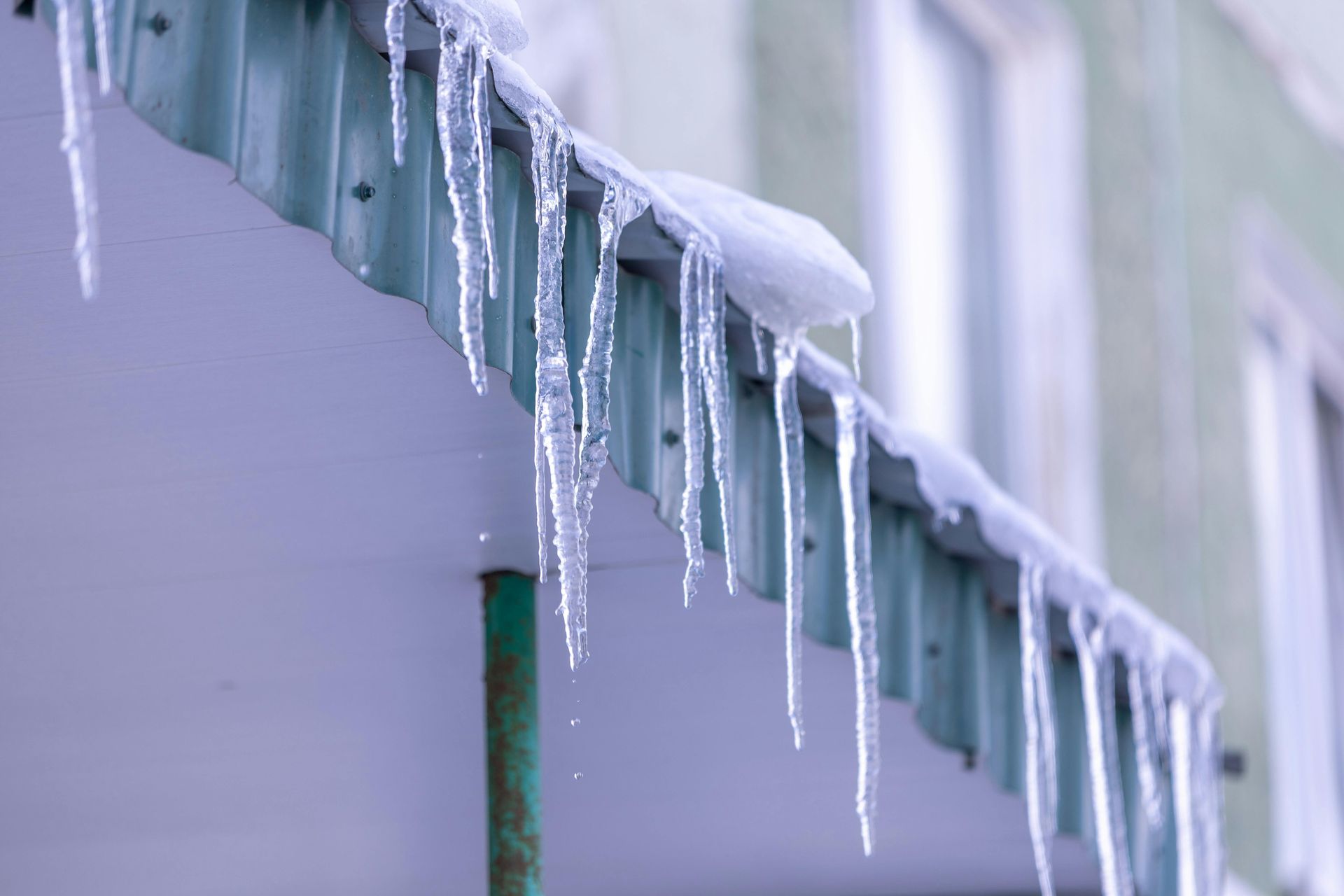
A properly installed metal roof shouldn’t start leaking just because the temperature dropped. But freeze/thaw cycles can expose a leak if water is already getting in somewhere. In other words, winter doesn’t always create the issue — it reveals it.
Here are a few common scenarios we see:
- A homeowner has an older roof, and the flashing around a vent is starting to fail. The first real freeze of the year happens, water gets into the gap, freezes, expands, and the leak becomes obvious.
- Or, a roof has sealant around a transition point that’s aging and cracking. When temperatures drop, the sealant becomes less flexible. Then it warms up again and moves slightly. Over time, that cracking widens — and winter accelerates the process.
This is why winter is often when homeowners notice roof problems for the first time. It’s not that their roof “suddenly got worse.” It’s that the weather changed, and the roof’s weakest points couldn’t hide anymore.
What About Condensation Under Metal Roofing in Winter?
This is one of the most misunderstood topics in roofing, and it comes up a lot with metal. Some homeowners worry that metal roofing causes condensation. In reality, condensation is caused by warm, moist air meeting a cold surface. That can happen with any roofing system if the attic ventilation and insulation aren’t doing their job.
In winter, your home is warm. Your roof is cold. If moisture from inside the home rises into the attic and doesn’t have a way to escape, it can condense on the underside of the roof deck. That moisture can lead to problems like mold, wood rot, and insulation breakdown — but those issues aren’t really about the metal panels. They’re about the overall roofing and ventilation system.
At Birdcreek Roofing, we look at the roof as a complete system. The panels matter, but so do ventilation, underlayment, and how the whole assembly works together.
Is It Normal for a
Metal Roof to Make Noise During Temperature Swings?
Yes — in many cases, it’s completely normal.
Metal expands and contracts, and during rapid temperature changes, you may hear subtle noises like ticking or popping. This can be especially noticeable on winter days, when the roof is cold in the morning and then warms quickly in direct sunlight.
Most of the time, it’s nothing to worry about. It’s simply the roof doing what it was designed to do. However, if a homeowner tells us their roof suddenly started making loud noises that weren’t there before, we take it seriously. Sometimes it can indicate that a panel was installed too tightly or that movement is restricted in a way it shouldn’t be.
What Should Homeowners Watch for During Winter?
You don’t have to climb up on your roof to be smart about winter roof performance. Most of the warning signs show up in places you can easily check. If you notice water stains on ceilings, bubbling paint, or a musty smell in your attic, it’s worth getting the roof inspected. If a leak only happens after a freeze and then stops, that’s also a major clue that freeze/thaw is involved. The biggest thing we tell homeowners is this: don’t ignore small signs. The earlier you catch a flashing issue or minor leak, the easier it is to fix.
Why Birdcreek Roofing Builds Metal Roofs for Texas Weather
Texas weather is unpredictable. We might get a mild winter, or we might get an ice storm that shuts down half the state. That’s why we don’t install metal roofs based on “average conditions.” We install metal roofs like we expect them to face:
- brutal summer heat
- high winds
- hail
- sudden winter freezes
- and constant expansion and contraction year after year
That means doing the details right — the things most homeowners never see, but absolutely feel when something goes wrong.
Want to Know How Your Roof Is Holding Up This Winter?
If you already have a metal roof and you’re wondering how it’s handling freeze/thaw cycles, we can help you get a clear answer. And if you’re considering upgrading to metal roofing, winter is actually a great time to plan. You don’t want to wait until the next big storm hits to find out your roof was already on borrowed time.
If you have questions or want to schedule an inspection, reach out to us. We’ll give you an honest assessment and help you understand what your roof is doing — and why.
Talk With a Roofing Consultant
Fill out the form below and one of our roofing consultants will be in touch with you within 24 hours.
Blog Page
Main Office
2608 N. Main St, Ste B-313
Belton, TX 76513