How Texas Heat Affects Commercial Roofing Over Time
Texas heat is tough on commercial buildings, and the roof takes the brunt. Day after day, commercial roofing systems are exposed to intense sunlight, high surface temperatures, and long stretches of dry, hot weather. Birdcreek Roofing serves commercial properties across Texas and emphasizes commercial roofing, hail and wind inspections, and prompt, reliable service for property owners who need clear answers about their roofs.
For business owners and property managers, the challenge is that heat damage usually does not show up all at once. It tends to build gradually. A roof may look fine from the ground, while the materials are slowly wearing down under constant sun exposure. By the time problems become obvious, the damage may already be affecting performance, energy efficiency, or the building's interior.
Understanding how Texas heat affects commercial roofing over time can help you catch issues earlier, plan more wisely, and avoid bigger disruptions later.
Heat Does More Than Make the Roof Hot
When most people think about summer roofing problems, they think about temperature alone. But heat affects a commercial roof in several ways at once.
First, roof surfaces can get much hotter than the air temperature. Roofing industry sources note that Texas roof surfaces can rise well above normal air temperatures, in some cases reaching roughly 160°F or more during summer conditions. That kind of exposure puts ongoing stress on roofing materials, especially across large commercial roof areas.
Second, heat often accompanies intense UV exposure. Ultraviolet radiation gradually breaks down roofing materials, especially when the roof is exposed to strong sunlight for months on end. Third, high daytime temperatures followed by cooler evenings create repeated cycles of expansion and contraction. That daily movement may seem minor, but over time it can wear down seams, flashing, sealants, and other roofing components. On a commercial roof, all of that adds up.
UV Exposure Speeds Up Material Breakdown
One of the biggest long-term effects of Texas heat is UV-related wear. Constant sunlight slowly degrades roofing materials, reducing their ability to perform as designed.
This kind of wear may manifest as drying, surface deterioration, loss of flexibility, weakening of protective layers, or a shortened service life. Roofing sources covering Texas conditions consistently cite UV exposure as one of the main reasons roofs age faster in hot climates.
For commercial properties, this matters because the roof may be protecting offices, retail inventory, equipment, warehouse contents, or tenant spaces below. Even if the roof is not currently leaking, material breakdown from long-term heat exposure can make it more vulnerable when storm season arrives or when other stress is added to the system.
Expansion and Contraction Wear Down Roofing Components
Texas heat does not just sit on the roof. It makes roofing materials move.
During the day, materials expand as they heat up. When temperatures drop later, they contract again. This expansion-and-contraction cycle repeats throughout the hottest months of the year. Over time, that movement can create stress around seams, fasteners, flashing, penetrations, and transitions. Multiple roofing sources discussing Texas conditions describe this thermal movement as a common cause of long-term weakening.
On commercial roofs, this is especially important because many buildings have large roof spans, rooftop equipment, and numerous roof details that must remain watertight. The larger and more complex the building, the more places there are for repeated thermal movement to create trouble.
Sealants and Flashing Can Become More Vulnerable
Commercial roofs rely on more than just the main field of roofing material. They also depend on flashing, sealants, and properly protected transitions around vents, HVAC units, wall intersections, skylights, and access points.
High heat can gradually dry out or weaken these protective components. Once that happens, water has more opportunities to enter the building when rain or wind-driven storms arrive. That is one reason a roof can perform acceptably during dry weather, then suddenly reveal a problem during the next major storm.
For business owners and property managers, these are often the hardest issues to spot without a professional inspection. The trouble may begin in a small area around a penetration or transition, but the interior signs may not appear until later.
Older Commercial Roofs Usually Feel Heat Stress More Quickly
Heat is hard on any roof, but aging commercial roofs usually have less margin for error. Materials that have already been through years of sun, storms, and seasonal temperature swings are more likely to show wear once another Texas summer sets in.
That does not necessarily mean an older roof needs immediate replacement. It does mean that the roof should be monitored more carefully. Small issues that may have been manageable before can become larger concerns when a roof has already lost some of its flexibility, protection, or overall resilience.
This is one reason Birdcreek Roofing’s inspection-focused messaging makes sense for Texas commercial properties. Their site emphasizes professional inspections and 13-point hail and wind damage evaluations, which fits well with the reality that many important roofing issues are easier to identify up close than from the ground.
Heat Can Contribute to Higher Energy Costs
Commercial roofing performance is not only about keeping water out. It also affects how hard a building has to work to stay cool.
As roofs absorb and hold more heat, indoor temperatures can become harder to control, especially in buildings with large roof footprints. Roofing sources note that hotter roof surfaces can increase cooling demands and make HVAC systems work harder during the summer.
In office buildings, retail spaces, and warehouses, this can manifest as higher utility bills, increased strain on rooftop units, and less consistent comfort inside the building. While energy efficiency is not the only reason to pay attention to commercial roofing conditions, it is definitely part of the picture in a hot climate like Texas.
Heat Damage Can Be Easy to Miss Until a Leak Appears
One of the hardest parts about heat-related roof wear is that it often develops quietly. There may be no dramatic event that signals a problem. No one storm. No one obvious blow-off. Just months or years of heat exposure are gradually wearing down the roof.
Then one day, there is a stain on a ceiling tile. Moisture near the inventory. Damp insulation. A recurring leak around a rooftop unit. By then, the issue may have been developing for quite a while.
That is why relying only on visible leaks is risky. A commercial roof can be losing performance long before the inside of the building shows it.
Rooftop Equipment Adds More Stress Points
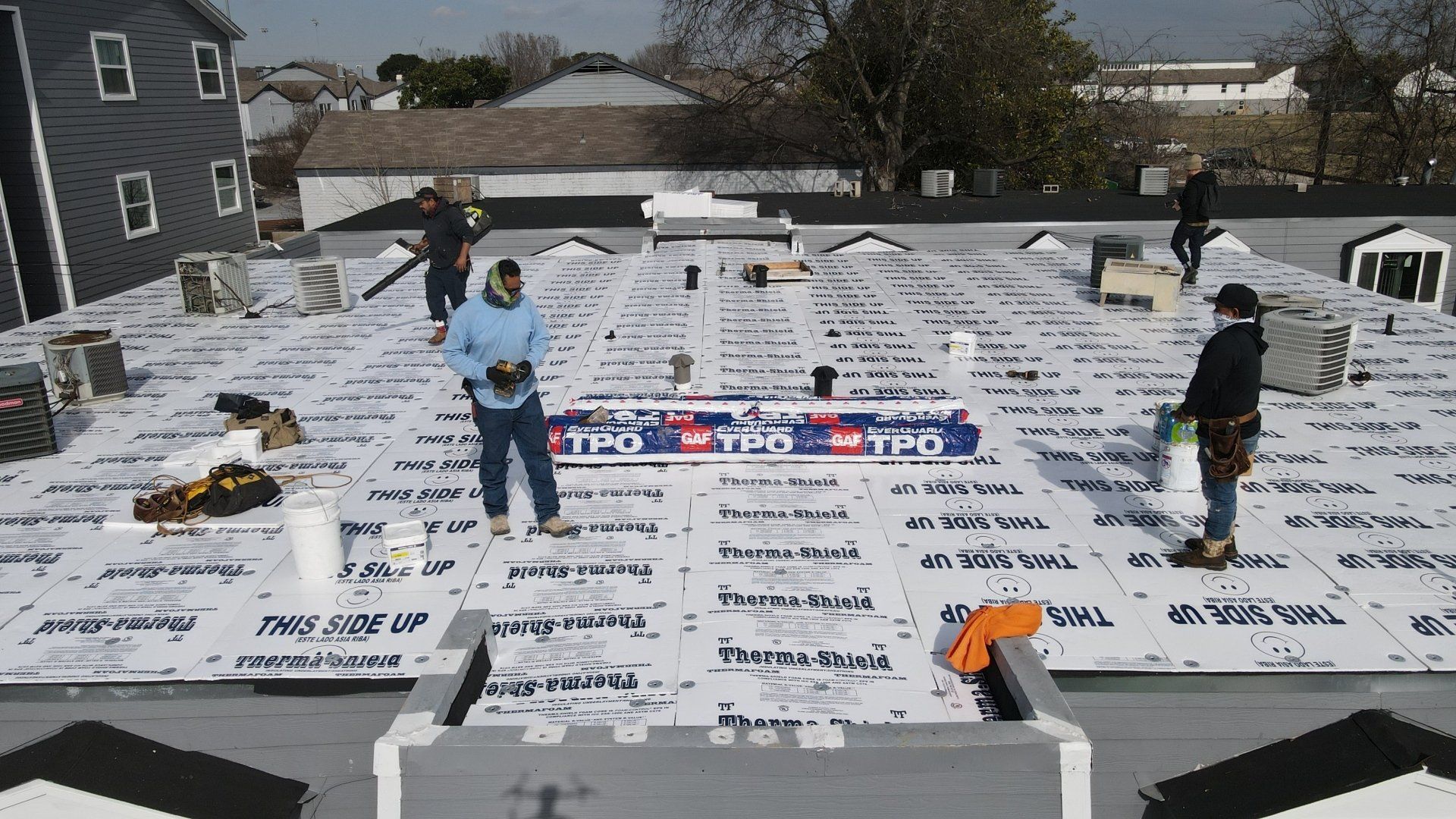
Many commercial roofs support HVAC systems and other equipment. These installations create extra transitions, penetrations, and service areas that already need close attention. Add intense Texas heat, repeated thermal movement, and regular technician foot traffic, and those sections of the roof can become more vulnerable over time.
Even when the main roofing system is holding up reasonably well, trouble can begin around areas where equipment is frequently mounted or serviced. Heat does not have to damage every part of the roof equally to create a real problem.
Why Routine Commercial Roof Inspections Matter in Texas
Because heat-related damage builds slowly, regular inspections are one of the best ways to stay ahead of it. A professional inspection can help identify worn materials, weak details, drainage concerns, flashing issues, and developing trouble spots before they turn into more disruptive repairs.
Birdcreek Roofing already positions commercial roofing and roof inspections as a core part of its services, and that is especially relevant in Texas, where prolonged heat and strong sun can accelerate roof wear between storm events.
For property owners and managers, inspections provide clarity. They help answer practical questions like:
- Is the roof holding up well for its age?
- Are there any areas that need attention before the hottest part of the year?
- Are we seeing early signs of wear that could become leaks later?
- Is this a repair issue, a maintenance issue, or something bigger to start planning for?
Those answers make budgeting and scheduling a lot easier.
Protecting Commercial Roofs Through the Texas Summer
Texas heat can affect commercial roofing over time by accelerating wear, stressing materials, weakening details, and increasing the likelihood that small vulnerabilities will turn into larger issues. UV exposure, repeated expansion and contraction, aging materials, and added stress around rooftop equipment can all take a toll, especially on large commercial properties.
At Birdcreek Roofing, we know that commercial roofing decisions can feel stressful and confusing, especially when your building, tenants, staff, or day-to-day operations are involved. That is why we focus on prompt, reliable service and straightforward guidance that helps Texas property owners make sense of the process. If you want to understand how your commercial roof is holding up against the Texas heat, contact us today to schedule an inspection and get clear answers about the next steps.
Talk With a Roofing Consultant
Fill out the form below and one of our roofing consultants will be in touch with you within 24 hours.
Blog Page
Main Office
2608 N. Main St, Ste B-313
Belton, TX 76513